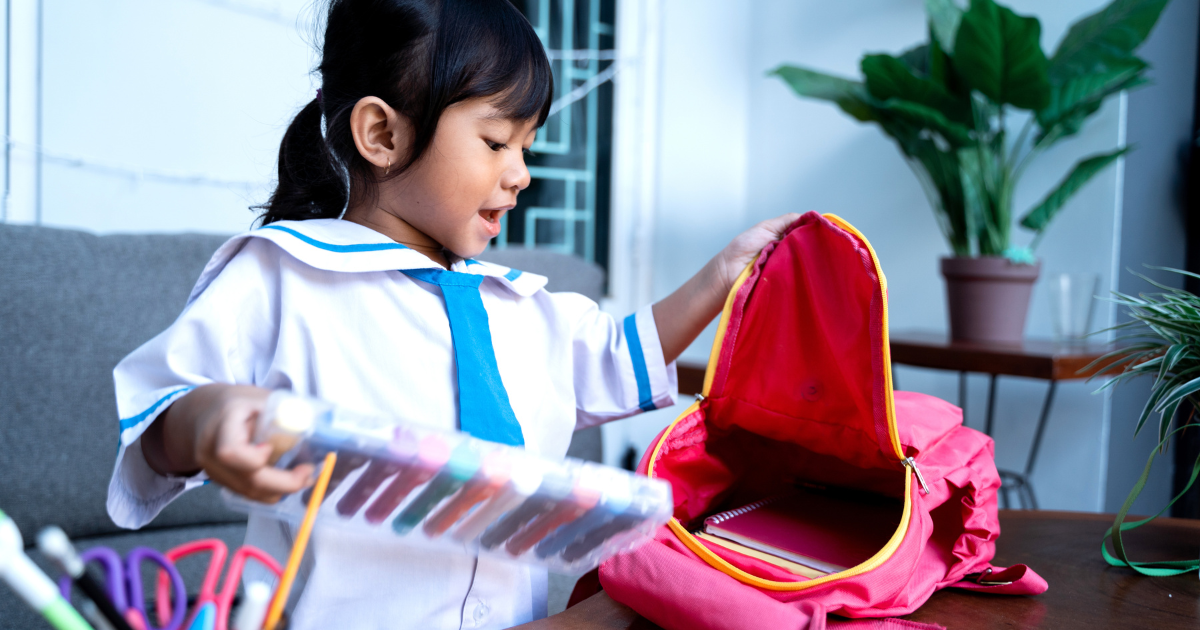
Time flies. Before you know it, your child would have transitioned from being a toddler to becoming a preschooler. The preschool age from 3 to 5 is when children start to push for more independence. No longer will you have to spoon feed them; by this age they would already have begun to feed themselves independently.
Young children love to do things for themselves and opportunities to develop this independence are abound in the home. However, you might also wonder what are the appropriate expectations for your child? What should they be able to do by themselves? Here are some tips to help your preschooler develop their sense of self and independence.
1: Foster Self-Help Skills
Teach your child basic self-help tasks like dressing themselves, putting on shoes, using the bathroom independently and washing their hands. These basic self-help skills are crucial steps in their journey towards independence. Not only that, these small tasks also build their confidence, develop fine motor skills and a sense of responsibility.
2: Encourage Decision-Making
Preschoolers are at an age when they are eager to make choices. Throughout the day, offer your child choices to help them make decisions. Start with simple choices like what they would like to wear or which toy to play with, and gradually increase the complexity. This practice builds decision-making skills, boosts their confidence and builds a sense of responsibility.
Keep in mind though that if young kids are given too many options, they can feel overwhelmed. So, instead of asking what they would like to do today, ask them if they would rather go to the playground or a hike. Offering only two or three options will help you say "yes" to whatever option they pick. Also, be sure to provide supervision and rules when giving them new freedom.
Providing plenty of chances for kids to make their own decisions (and learn from mistakes) is one way parents can show children that their preferences, ideas, wants, and needs are respected and valued. The more practice kids have making decisions for themselves, the better.
3: Promote Responsibility
Assign age-appropriate chores that your child can handle independently. This could include putting away toys, helping to set the table, or feeding a pet. Assigning responsibilities helps children understand the importance of contributing to the household and builds a sense of ownership. Always remember to acknowledge their efforts and praise their accomplishments. It will help to boost their self-esteem!
The chores don't have to be big, just something that requires them to think ahead and plan. For example, if there is laundry piling up, ask them what they think should happen. Encourage them to bring a pile of laundry to the washing machine. See if they can help you put clothes into the machine. Maybe they want to help push the button. That's awesome! All of these small tasks are needed to start laundry, and by involving them, they will feel empowered and eventually, they will get to the point where they can do their laundry on their own!
4: Support Problem-Solving
Preschoolers are natural problem-solvers. Encourage their cognitive development by offering opportunities to solve simple problems. When they encounter challenges or conflicts, guide them through the process of finding solutions rather than immediately providing answers. This helps them develop critical thinking skills and build resilience.
Just like when children are first learning to crawl or walk, we must let them fall. Similarly, when children are learning to put on their shoes, we must allow them to put them on the wrong feet. Wait until your child asks for help or provide a small hint to get them to the next step.
Presenting your child with tasks that are a little bit challenging, but still within the realm of what they can do with some support, helps them learn to deal with frustration, solve problems, and stick out challenging situations. You can acknowledge that something is hard and let your child know that you are proud by offering praise for trying new or difficult things. However, be sure to praise the effort rather than the outcome or the skill: “I’m so proud of you for sticking with that even when it got hard,” rather than, “You’re so good at tying your shoes!”
5: Promote Social Skills
Social interaction is a vital aspect of independence. Encourage your child to interact with others, whether it’s through playdates, daycare, or at preschool. These interactions teach them valuable lessons in how to share, communicate and cooperate.
6: Encourage Self Reliance
Children aren't likely to become more independent if they never get the chance to actually be independent. Encourage self-reliance by giving your child plenty of opportunities to explore without being overly supervised. If they are playing in another room, let them play without you. If you must check in, try to be discreet. If you notice a conflict with a sibling or friend, give them a chance to resolve it productively before interceding.
Let them walk a little ahead of you when walking in a shopping mall, but do use your best judgment based on how crowded it is and their readiness. Give them a chance to go up to a stall or go inside the cafe, order, and pay for their meal while you watch from a safe vantage point. Of course, you will have to give them the money to do so.
7: Develop Organizational Skills
Teach your child to organize their belongings and keep their play area tidy. Use visual cues, such as labelled bins or pictures, to help them categorize and organize their toys, books, and other items. These skills will translate into classroom organization when they start kindergarten or school and alleviate a lot of stress at home!
8: Promote Self-Regulation
Help your child develop self-control and emotional regulation skills. Teach them techniques to calm themselves when they are upset or frustrated, such as taking deep breaths or counting to 10. Encourage them to express their emotions in appropriate ways and provide them with the language to articulate their feelings.
For example, you could provide a colour for the big emotions such as blue for sadness, or red for anger as this will allow them to start communicating their feelings in an age-appropriate way. If they come up to you with a red face and clenched fists and exclaim, “I’m red!” then you can proceed to ask them why and work through the issue. Once the situation has calmed down, you can praise the communication skills they used and how proud you are of them for using their words.
9: Nurture Independent Play
Allow your preschooler to engage in independent play without constant supervision or direction. Independent play encourages creativity, problem-solving, and imaginative thinking. Offer the child a variety of art materials such as crayons, markers, chalk, and finger paints, building materials or imaginary play props and let them construct their own craft or play. You can also include materials that are not toys at all. Repurposed materials and recyclables, such as paper towel rolls, coffee canisters, and cereal boxes can be used in endless ways. A paper towel roll can be a telescope, a tube, a car, a plane, or even a magic wand. A cereal box can be a barn for animals, a building block, or a steppingstone.
Observe your child and notice what they’re drawn to. One child may be interested in stacking and construction, while another wants to play pretend. Use these observations to guide and extend their play. If they seem stuck or confused, you can model a solution or comment on their actions, and then encourage them to try again on their own.
10: Build Routines and Expectations
Consistency is key to nurturing independence. Establish consistent daily routines and set clear expectations for your child. Just like adults, when children can anticipate their day, they are better equipped to take on responsibilities. Routines such as brushing their teeth, washing their faces in the morning and changing out of their pyjamas provide structure and help children develop a sense of independence and responsibility. Make sure they understand what is expected of them and offer praise and positive reinforcement when they meet those expectations.
It is important to remember that some tasks may just be too big for preschoolers. Asking a four-year-old to “clean your room” may feel overwhelming if it is not broken down into smaller chunks or met with some help and guidance. Chores such as cleaning up the stuffed toys and blocks, or helping to fold some of the laundry are great chores to start with and build upon.
11: Avoid Over-Correcting
As much as possible, avoid correcting your child when they are trying to do something independently. For example, if you ask your child to make their bed, and it isn't perfect, resist the urge to fix it. Always try to keep in mind that perfection isn't the goal. The goal is to allow your little one to take on the responsibility. They will not want to keep trying if every time they do, they feel they aren't doing it up to your standards.
12: Celebrate Achievements
Celebrate your child’s milestones and achievements, no matter how small. Their first successful attempt at tying their shoes or dressing themselves is a significant step towards independence. Your praise and encouragement will motivate them to keep on trying.
Morinaga Chil-kid
With children growing older, taking on more responsibilities and becoming more independent, they need the nutrients to supply the energy to support their growth and development.
Chil-kid 4
Like Chil-kid 3 made for children aged 1 to 3, Chil-kid 4, which is made for preschoolers and school-aged children aged 3+ to 9, features 45 carefully-balanced nutrients such as ARA and DHA, Inositol, GOS, 5 Nucleotides, Omega 3&6 Long-Chain Polyunsaturated Fatty Acids (LCPs) and 21 Vitamins and Minerals.
Children in the 3+-to-9-year age gap are in their golden growth years. With their changing nutritional needs that come along as they age, Chil-kid 4’s DHA, ARA, Inositol and choline provides the nutrients to facilitate continued brain connections. The Protein, Calcium, Vitamin D and Phosphorous facilitate muscle and bone mass development while nutrients such as GOS and Nucleotides support healthy gut function and builds stronger immunity.
The nutrients in Chil-kid 4 are calibrated in accordance with the physical requirements of this age group. For example, children up to 9 years old need higher calcium and vitamin D for bone building. Chil-kid 4 contains more calcium (305 mg/serving) and vitamin D (2.5 μg/serving) than Chil-kid 3, ensuring strong growth during school years.
Chil-kid 3 and 4
Both Chil-kid 3 and 4 do not contain Sucrose and are specially formulated for Asian children based on the right levels and amount of nutrients for the right age.
Featuring a mild vanilla flavour, the milk dissolves easily in lukewarm water. Just two to three servings a day alongside meals, Chil-kid 3 and 4 help children meet their daily Recommended Nutrient Intake (RNI).
Morinaga Chil-kid is a Japanese formulation that is backed by over 100 years of R&D and the latest scientific research according to the international standard of growing up milk. Wholly produced from dairy farms to the packaging process in a state-of-the-art plant in the Netherlands, both milk formulas are fully imported and go through a double inspection process with samples sent to Japan for a second inspection before they are shipped to Malaysia.