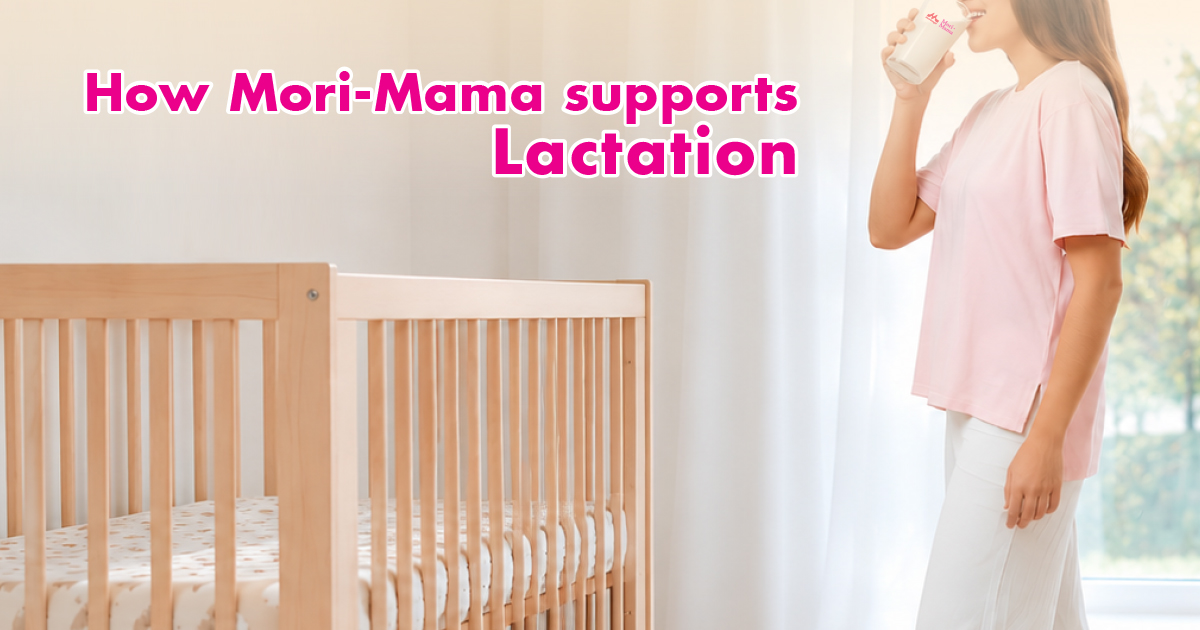
The first few days after birth are an incredible time of transition for both you and your child. Your body is learning to make milk, and your child is learning how to feed. These early days set the stage for your milk supply in the weeks and months to come.
You generally need to eat about 330 to 400 extra calories daily[1], or roughly 2,000--2,800 calories total, to support milk production and maintain energy. Focus on nutrient-rich foods, including lean protein, eggs, whole grains, fruits, vegetables, and calcium-rich dairy. Drink to satisfy thirst. A dry mouth after nursing is common due to hormone releases, so keeping water nearby is helpful.
The hormones released during this time are prolactin, which stimulates milk production, and oxytocin, which causes the \"let-down\" reflex that releases milk. These hormones work on a supply-and-demand basis triggered by suckling, while a drop in oestrogen and progesterone after birth allow milk production to begin.
Mori-Mama, with its 41 nutrients can help with maternal recovery after birth and boost milk production. Formulated with lactoferrin, live cultures of probiotics Bifidobacterium longum BB536 and prebiotics FOS (Synbiotic B. longum BB536+ FOS), folic acid, iron, Vitamin A, Vitamin D3, Vitamin B1, B2, B3, B5, B6 and B12, DHA and ALA, choline, calcium, zinc, iodine, and many others, Mori-Mama provides support from within, not just for pregnancy, but also with lactation.
Lactation
|
Stage
|
Main Concerns
|
Nutrients in Mori-Mama
|
Functions
|
|
Lactation
|
Lactating mom’s need for continuous & higher nutrition support
|
Synbiotic (B. longum BB536 + FOS)
|
Supports maternal gut health & digestive balance during lactation
|
|
Iodine + Choline
|
Supports child’s brain development
|
|
Protein
|
Supports maternal recovery and milk production
|
|
DHA (Omega 3)
|
Supports child’s brain and eye development through breastmilk
|
|
Calcium + Vitamin D3
|
Supports bone health for mother & child
|
|
Vitamin B12
|
Supports mother & child’s nervous system
|
• Synbiotic (B. longum BB536 + FOS): Support for Maternal Gut Health and Digestive Balance during Lactation
Mori-Mama contains Bifidobacterium longum BB536 (B.longum BB536). It is a well-established, clinically effective multifunctional, Human-Residential Bifidobacteria (HRB) probiotic strain known for improving gastrointestinal health, boosting immunity[2], and supporting breast milk quality[3] during the lactation period.
During lactation, your breast milk comes with its own microbiome[4], and research suggests that helpful bacteria from your gut can reach your milk through a direct "entero-mammary pathway[5]", where immune cells in the gut collect beneficial bacteria, travel through the bloodstream or lymphatic system, and deliver them directly into the mammary glands.
In Mori-Mama, B. longum BB536 is paired with the prebiotic fructo-oligosaccharides (FOS) to feed and grow the live cultures of B. longum BB536. FOS selectively feeds good bacteria in the gut and helps B. longum BB536 to thrive. FOS is also a stool softener which helps alleviate postpartum constipation which is common due to hormonal shifts, dehydration, pain, and fear of straining. Both B. longum BB536 and FOS work in a synergistic manner creating Synbiotic (B. longum BB536 + FOS) to support the mother’s gastrointestinal health, boost the immune system, and help establish a healthy gut microbiome in the child through breast milk[6].
Mori-Mama delivers 1.3 billion CFU of B. longum BB536 and 1.3g of FOS per serving.
Through Synbiotic (B. longum BB536 + FOS), Mori-Mama enhances the quality of breastmilk[7] by facilitating the transfer of beneficial bacteria to the child. Research[8] indicates that supplementation with Synbiotic (B. longum BB536 + FOS) is linked to improvements in breast milk composition, enhancing its protective nutritional profile for the child post-delivery. It also promotes a healthy immune system for both mother and child[2], and fosters a balanced gut microbiome in the mother, which helps prevent common issues like mastitis. [9]
As you eat more during this period, Synbiotic (B. longum BB536 + FOS) helps maintain gut balance by lowering the intestinal pH[10], blocking harmful pathogens, and naturally passing protective immune benefits to your nursing child. The synbiotic maintains intestinal homeostasis during higher food intake by increasing its abundance in the gut, promoting regular, comfortable bowel movements, and inhibiting \"bad\" bacteria.
• Iodine and Choline: Support for the Child’s Brain Development
Iodine and choline are essential nutrients for a nursing child’s brain development[11] as they support, cognitive function, memory, and nervous system maturation. Iodine drives thyroid hormone production for brain growth, while choline acts as a building block for brain structure and memory-related neurotransmitters.
Iodine is a vital component of thyroid hormones thyroxine and triiodothyronine. Thyroid hormone levels affect proper foetal and infant growth and neurological (brain) development. A deficiency can cause hypothyroidism (underactive thyroid), growth retardation, and impaired cognitive and motor development. Nursing children rely solely on their mother’s milk for iodine to produce thyroid hormones. Therefore, lactating mothers need to get enough iodine.
Mori-Mama contains iodine and delivers 55mcg of the trace mineral per serving.
Choline is essential during lactation to support the rapid brain development, cognitive function, and memory of the nursing child, as it is transferred directly through breast milk. Choline is essential for creating phospholipids, which are critical components of brain cell membranes.[12] It supports the development of the hippocampus, the area of the brain responsible for memory, and the synthesis of the neurotransmitter acetylcholine, which influences cognitive performance. Choline promotes the proliferation and differentiation of neurons. Lactating mothers are recommended to consume choline daily to support both their own health and the child’s rapid brain growth.
Mori-Mama contains choline and delivers 44mg of the essential nutrient per serving.
• Protein: Support for Maternal Recovery and Milk Production
Protein is an essential macronutrient made of amino acid building blocks. Protein is important for postpartum recovery as it repairs tissues damaged during childbirth (especially C-sections) while it supports the production of antibodies for immunity[13]. It aids in rebuilding uterine linings and strengthening muscles.
Protein also boosts breastmilk production by providing essential amino acids[14], which are the building blocks for milk production while it supports the synthesis of prolactin (the hormone driving milk supply). Adequate protein intake improves breast milk quality as it provides the essential amino acids, builds immunity, and supports the development of the child’s brain and gut. A high-protein maternal diet increases the concentration of beneficial amino acids that ensures the body has the necessary fuel to maintain milk volume and quality, especially during the high-energy demands of lactation.
Mori-Mama provides 218kcal of energy and 10.5g of protein per serving.
• DHA: Support for the Child’s Brain and Eye Development through Breastmilk
DHA, a critical omega-3 fatty acid, acts as a structural building block for a child’s brain and eyes, making up over 90-95% of the omega-3s in the brain. Through breastmilk, DHA ensures rapid development of neural tissues, enhances cognitive function, improves visual acuity, and strengthens brain-cell connectivity[15] during the critical first two years of life.
DHA is also important for you during lactation. Adequate DHA intake helps replenish your own DHA stores (which naturally deplete during pregnancy), supports postpartum mood, and provides anti-inflammatory and long-term cardiovascular benefits[16].
Mori-Mama provides 33mg of DHA per serving.
• Calcium and Vitamin D3: Support for Bone Health for Mother and Child
As lactation can temporarily reduce a mother’s bone density, calcium and Vitamin D3 are vital to support infant bone development and prevent maternal bone loss. Calcium provides the essential building blocks for the child’s skeleton, while Vitamin D3 boosts calcium absorption in the gut and supports immune health.
Lactating women lose 3% to 5% of their bone mass to supply calcium for breast milk. Adequate intake helps ensure this bone mass is recovered after weaning.
While breast milk contains calcium, it often lacks sufficient Vitamin D. Maternal Vitamin D3 supplementation is necessary to increase the Vitamin D content in breast milk[17], which is crucial for preventing rickets and supporting the child’s immune system.
• Vitamin B12: Support for Mother and Child’s Nervous System
Vitamin B12 is essential during lactation for developing and maintaining the nervous system of both mother and child, primarily by supporting brain development, forming nerve-protective myelin, and aiding cognitive function[18]. It helps prevent irreversible neurological damage in children, including motor function delays, by ensuring proper brain growth through breast milk.
Mori-Mama contains 1.7mcg of Vitamin B12 per serving.
Other Nutrients Needed for Lactation
• Iron: Support for the mother’s physical recovery from childbirth, prevent postpartum fatigue, and maintain healthy milk production
Childbirth often involves blood loss, putting new mothers at a high risk for iron deficiency and anaemia. Iron is therefore crucial during the postpartum period to prevent maternal anaemia, recover from childbirth blood loss, and sustain your milk supply and physical energy for the demands of lactation[19].
While human milk contains relatively low levels of iron as children are born with built-in iron reserves to last their first 6 months, maternal iron is critical for your own postpartum health, preventing extreme fatigue and supporting your overall wellbeing.
Mori-Mama contains 10mg of iron per serving.
Mori-Mama also contains lactoferrin which is a multifunctional, iron-binding protein found naturally in human breast milk, especially colostrum. It is a key component of the immune system and plays a vital role in regulating iron levels, supporting gut health, and fighting off bacterial and viral infections.
Lactoferrin aids the body in regulating iron absorption, which is particularly beneficial for recovering from postpartum anaemia. It enhances the mother’s immunity, which can be stressed during the postpartum period and promotes a healthy microbiome while reducing inflammation, thereby contributing to overall postpartum recovery[20].
For the nursing child, lactoferrin acts as a powerful antimicrobial and antiviral agent[21], protecting the child’s developing immune system. As lactoferrin binds and transports iron to where it is needed, it ensures the child receives adequate iron while preventing bacteria from accessing it.
Mori-Mama contains 22mg of lactoferrin per serving.
As you can see, the nutrients in Mori-Mama play a big role in supporting your lactation journey. These nutrients come to you in an all-in-one, easy-to-digest formulation that can help boost your breast milk quality and production. Only one serving per day, alongside nutrient-dense meals, is needed to help you fulfil your daily vitamin and nutrient needs.
Backed by more than 100 years of Morinaga R&D, Mori-Mama goes through a dual inspection process as every batch is first inspected at their manufacturing facilities, followed by a second inspection in Japan which ensures uncompromising quality and safety.
Mori-Mama does not contain added sucrose, has a mild vanilla taste and is certified halal.
[1] Mayo Clinic Staff. (n.d.). Breastfeeding nutrition: Tips for moms. Retrieved from https://www.mayoclinic.org/healthy-lifestyle/infant-and-toddler-health/in-depth/breastfeeding-nutrition/art-20046912
[2] Wong, C. B., Odamaki, T., & Xiao, J. Z. (2019). Beneficial effects of Bifidobacterium longum subsp. longum BB536 on human health: Modulation of gut microbiome as the principal action. Journal of Functional Foods. Retrieved from https://www.sciencedirect.com/science/article/pii/S1756464619300684
[3] Seed Health. (n.d.). Probiotics while breastfeeding: Benefits guide. Retrieved from https://seed.com/cultured/probiotics-while-breastfeeding-benefits-guide/
[4] National Institutes of Health, National Library of Medicine. (n.d.). The human breast milk microbiome. Retrieved from https://pmc.ncbi.nlm.nih.gov/articles/PMC9110848/
[5] National Institutes of Health, National Library of Medicine. (n.d.). The entero-mammary pathway: Transfer of maternal gut bacteria to breast milk. Retrieved from https://pmc.ncbi.nlm.nih.gov/articles/PMC4224214/
[6] National Library of Medicine, PubMed. (n.d.). Synbiotic supplementation and maternal gastrointestinal health during lactation. Retrieved from https://pubmed.ncbi.nlm.nih.gov/41909908/
[7] Retrieved from https://www.beginrebirth.com/en-en/blogs/news/top-5-probiotic-strains-for-pregnancy-and-breastfeeding?srsltid=AfmBOoqRVo_7QqFGoPthMONYPfQrwBAQXvrcDvM6c3dB1-Eqs1OILGU1
[8] National Library of Medicine, PubMed. (n.d.). Bifidobacterial supplementation and changes in breast milk composition. Retrieved from https://pubmed.ncbi.nlm.nih.gov/25056226/
[9] National Institutes of Health, National Library of Medicine. (n.d.). Maternal gut microbiome balance and prevention of mastitis. Retrieved from https://pmc.ncbi.nlm.nih.gov/articles/PMC9462749/
[10] National Institutes of Health, National Library of Medicine. (n.d.). Intestinal pH, gut pathogens, and synbiotic supplementation. Retrieved from https://pmc.ncbi.nlm.nih.gov/articles/PMC6024036/
[11] Centers for Disease Control and Prevention. (n.d.). Iodine. Breastfeeding special circumstances: Diet & micronutrients. Retrieved from https://www.cdc.gov/breastfeeding-special-circumstances/hcp/diet-micronutrients/iodine.html
[12] InfantRisk Center. (n.d.). Choline during pregnancy & lactation. Retrieved from https://infantrisk.com/content/choline-during-pregnancy-lactation
[13] Pregnancy Plate. (n.d.). Postpartum nutrition for breastfeeding recovery. Retrieved from https://pregnancyplate.com/blog/postpartum-nutrition-breastfeeding-recovery
[14] National Institutes of Health, National Library of Medicine. (n.d.). Protein intake, amino acids, and breastmilk production. Retrieved from https://pmc.ncbi.nlm.nih.gov/articles/PMC10255346/
[15] OmegaQuant. (n.d.). Omega-3s & breastfeeding: Why DHA status matters from day one. Retrieved from https://omegaquant.com/omega-3s-breastfeeding-infant-brain-development-why-dha-status-matters-from-day-one/
[16] National Institutes of Health, National Library of Medicine. (n.d.). Maternal DHA status, postpartum mood, and cardiovascular health. Retrieved from https://pmc.ncbi.nlm.nih.gov/articles/PMC3175709/
[17] ScienceDirect. (n.d.). Maternal vitamin D3 supplementation and breast milk vitamin D content. Retrieved from https://www.sciencedirect.com/science/article/abs/pii/S1521690X18300071
[18] Centers for Disease Control and Prevention. (n.d.). Vitamin B12. Breastfeeding special circumstances: Diet & micronutrients. Retrieved from https://www.cdc.gov/breastfeeding-special-circumstances/hcp/diet-micronutrients/vitamin-b12.html
[19] La Leche League Canada. (n.d.). Iron and breastfeeding. Retrieved from https://www.lllc.ca/iron-and-breastfeeding
[20] ResearchGate. (n.d.). Lactoferrin association with maternal nutritional status and lactation stages. Retrieved from https://www.researchgate.net/publication/341017811_Lactoferrin_Association_with_Maternal_Nutritional_Status_and_Lactation_Stages
[21] ScienceDirect. (n.d.). Lactoferrin as an antimicrobial and antiviral agent for the nursing child. Retrieved from https://www.sciencedirect.com/science/article/abs/pii/S0899900721003622